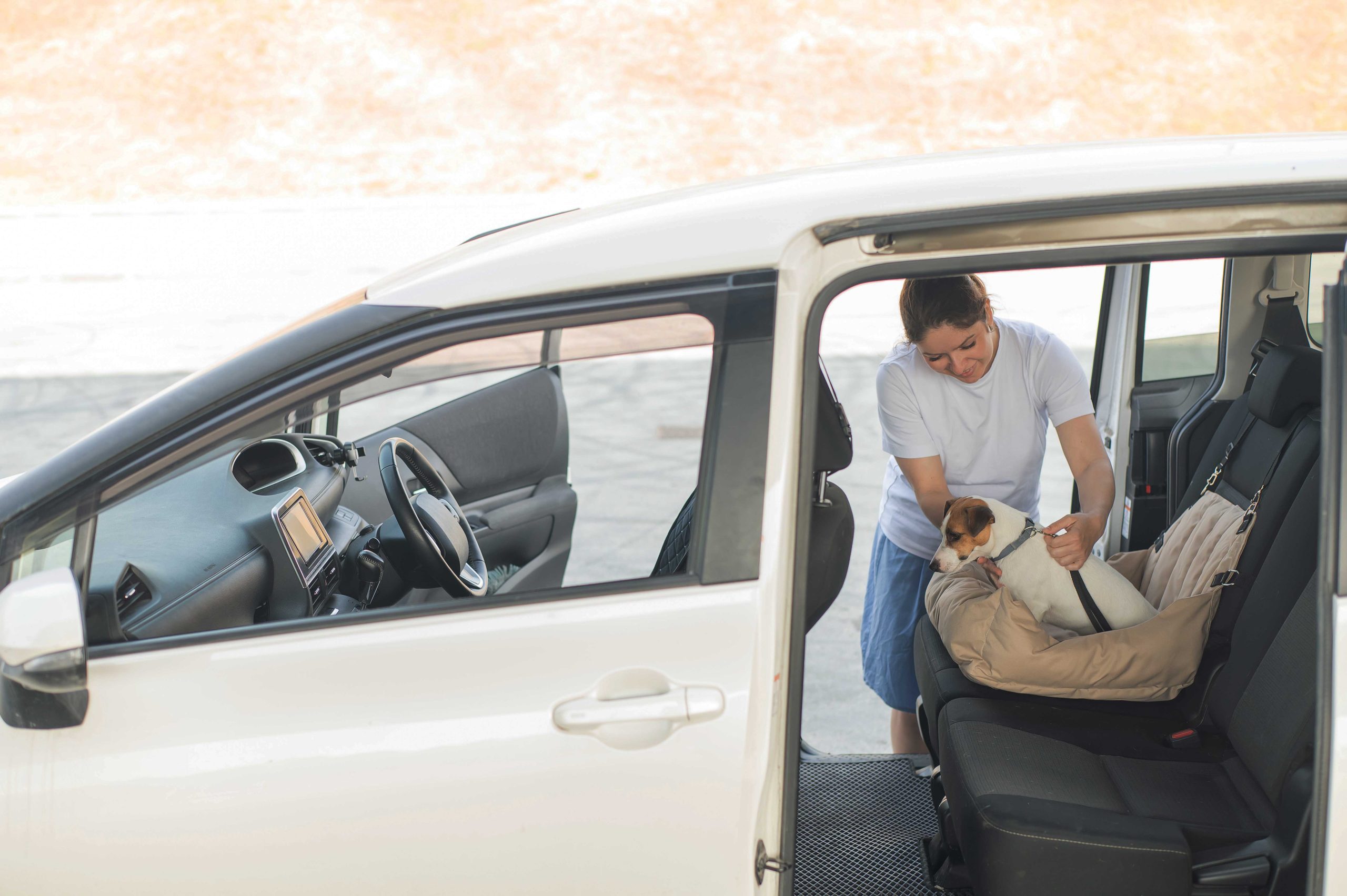
Whether it’s a quick trip to the vets, a weekend away, or a long-awaited family holiday, most dog owners will travel with their dog by car at some point. Whilst it’s a normal part of life and an everyday occurrence for some, driving with dogs comes with legal responsibilities and safety risks that many drivers overlook.
Driving with an unrestrained dog can lead to fines as well as increase the risk of an accident and invalidate your car insurance. Because of this, it’s very important to understand the rules and follow best practice every time your dog joins you on a road trip.
We’ve put together a handy list of everything you need to know about travelling with dogs in the car, including UK laws, safety tips, and common mistakes to avoid.
Is it legal to drive with a dog in the car in the UK?
Yes, but there are rules. Rule 57 of the Highway Code states that dogs must be ‘suitably restrained’ when travelling in a vehicle. This is to ensure they don’t distract the driver or cause injury to you or themselves if you have to stop suddenly.
If your dog is not properly restrained, you could:
- Be fined
- Receive penalty points
- Be charged with careless driving
- Risk invalidating your car insurance if an accident occurs
In short, if your dog causes a distraction or contributes to an incident when you are driving, you could face serious consequences.
The do’s and don’ts of driving with dogs
The do’s of driving with dogs
- Ensure your dog is properly restrained
- Build your dog’s confidence with car travel
- Bring water, treats, and familiar items
- Plan regular breaks on long journeys
The don’ts of driving with dogs
- Don’t let dogs hang out of the car window
- Never leave your dog alone in a parked car
- Don’t feed your dog just before travelling
- Don’t let your dog distract the driver
The dos of driving with dogs
Ensure your dog is properly restrained
Your dog should never be free to roam around the vehicle when you are driving. Restraining your dog prevents them from climbing onto your lap, blocking your view, or interfering with controls. It not only protects you in the case of an accident, but also your dog.
The Highway Code suggests that the following are good ways to suitably restrain your dog whilst driving:
- Seatbelt harness
- Pet carrier
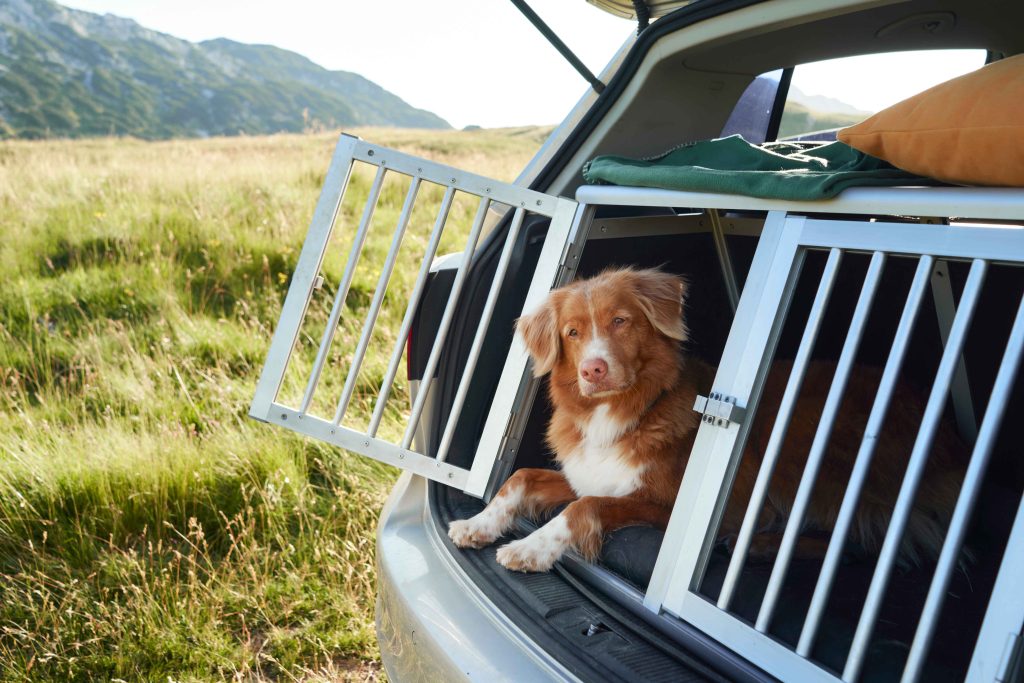
- Dog cage
- Dog guard
Build your dog’s confidence with car travel
Some dogs love car journeys, whilst others find them incredibly stressful. If your dog is anxious when you drive, this can easily lead to accidents as your attention will be on them rather than the road.
Pairing car trips with positive experiences like a walk, visiting friends, or receiving treats can help dogs associate the car with good things.
You can help to introduce your dog to the car by:
- Letting them sit in the car whilst it’s parked
- Starting the engine without driving whilst they’re in the car
- Build up to short journeys with high value rewards at the end
- Gradually increase distance over time
Bring water, treats, and familiar items
Cars can get warm quickly, especially on longer trips. When travelling with your dog, it’s a good idea to ensure you have fresh drinking water and a non-spill water bowl for them. It can also be helpful to take some dog treats with you to reward them after your trip and some familiar items that will help them to feel comfortable in the car, such as their favourite blanket.
This way they will associate the car with good things, and staying hydrated and comfortable can also help to reduce their stress.
Plan regular breaks on long journeys
If you’re driving a long distance with your dog, regular stops are essential. You should aim to stop every couple of hours so that your dog can:
- Stretch their legs
- Go to the toilet
- Get fresh air and water
Some service stations are more dog-friendly than others, so planning your route in advance can make the journey smoother for everyone.
The don’ts of driving with dogs
Don’t let dogs hang out of the car window
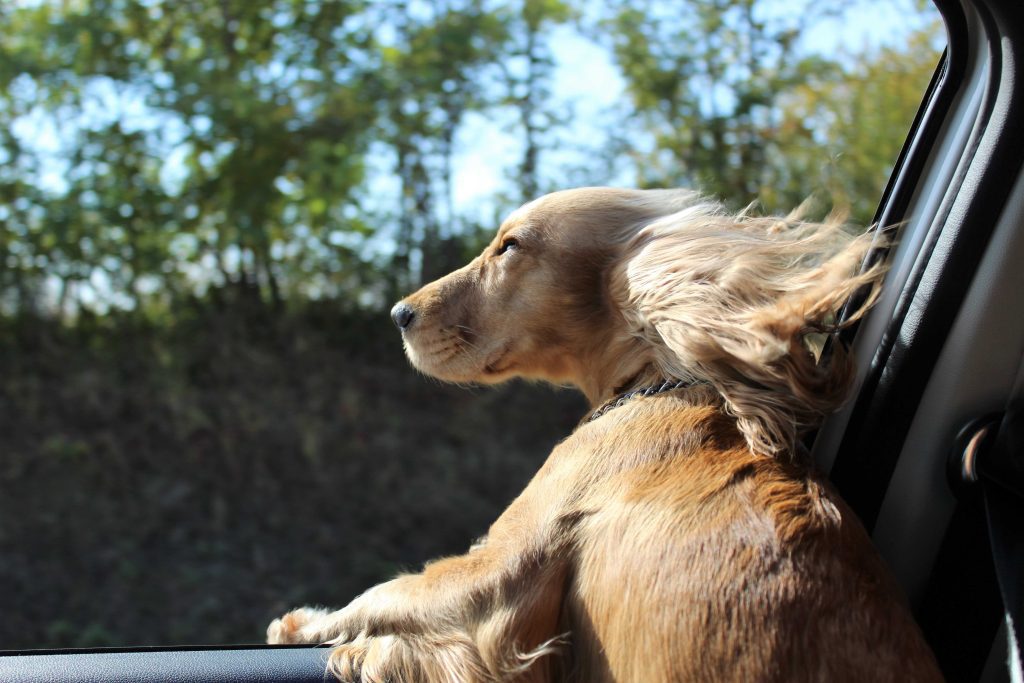
We’ve all seen a car driving down the road with a dog’s head sticking out the window. Whilst this might look cute, it can actually be incredibly dangerous. Flying debris, insects, or stones can seriously injure a dog’s eyes or ears.
There’s also a real risk of dogs that are not properly restrained jumping out of the window or being thrown from the car if you have to brake suddenly or in an emergency.
Never leave your dog alone in a parked car
Even on mild days, the temperature inside a car can rise rapidly. Animal welfare charities such as the RSPCA warn that dogs can suffer heat stroke in as little as 15 minutes in a hot car, even with the windows cracked open.
Leaving a dog alone in a car is not only dangerous for the dog but can also lead to legal consequences for the owner, ranging from heavy fines to prison sentences, due to this being considered animal cruelty under the Animal Welfare Act 2006.
Don’t feed your dog just before travelling
Feeding your dog immediately before a journey can increase the risk of motion sickness. You should try to create a feeding schedule where they get a light meal three or so hours before you leave in the car. You should also avoid feeding your dog whilst the car is moving as this can cause an upset stomach.
It can be a good idea to bring along some food on long journeys in case you break down or get stuck in traffic and need to stop off. You could also bring treats to reward your dog once the journey is complete.
Don’t let your dog distract the driver
It is incredibly important that your dog does not distract the driver of the car, whether that is you or someone else. Even a momentary distraction can lead to an accident and could be classed as careless driving.
Dogs should never:
- Sit on the driver’s lap
- Move freely between seats
- Block mirrors, pedals or controls
Frequently asked questions about driving with dogs
Can you get fines for having a dog loose in the car?
Yes, if your dog distracts you or contributes to dangerous driving, you could be fined or receive penalty points.
What’s the safest way for a dog to travel in a car?
A secured harness or crate is considered the safest option but it will depend on the size of your car and dog as to which is most appropriate.
Can dogs travel in the boot of a car?
Yes, as long as your dog is properly secured with a guard or crate.
Does car insurance cover accidents involving dogs?
Insurance may be affected if a dog is unrestrained and contributes to an accident. It is always worth checking your policy terms for more information.
Safe journeys start with the right cover
Driving with dogs doesn’t have to be stressful. As long as you plan ahead, follow the Highway Code, and prioritise safety for both you and your pet you can have a great road trip together.
Whether you’re borrowing a car for a visit to the vets or heading off on a weekend break with your dog, it’s important to make sure you’re properly insured.
Short-term car insurance offers flexible cover from just an hour up to 30 days. It’s a quick and flexible way to make sure you are fully covered on the roads, allowing you to relax and focus on your journey ahead with peace of mind. Get a quote today and you and your four-legged friend can be on the road in minutes.